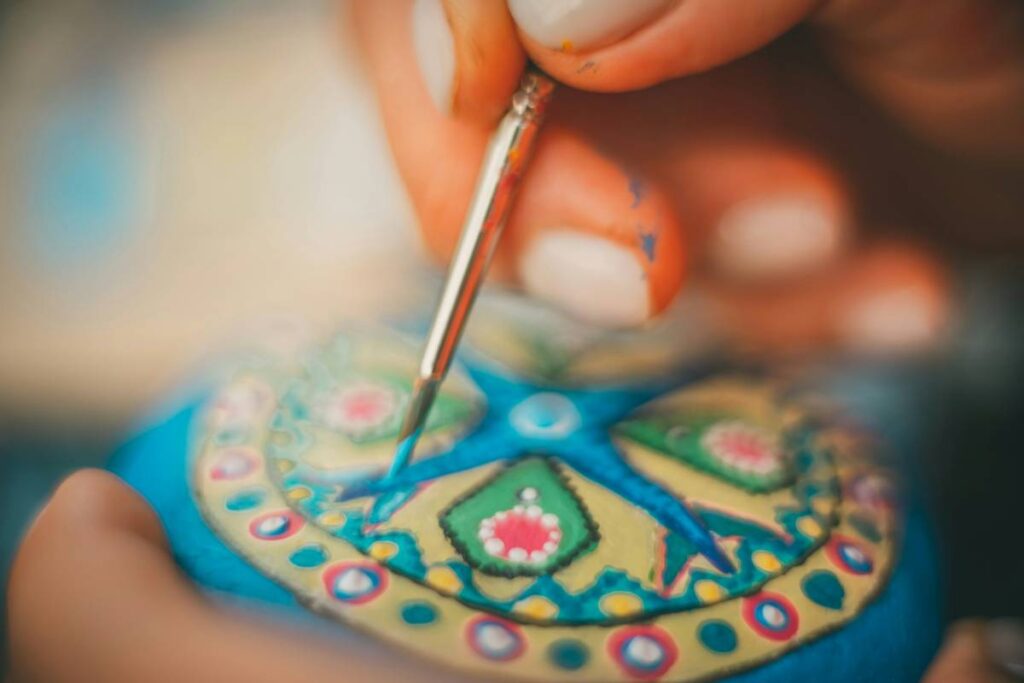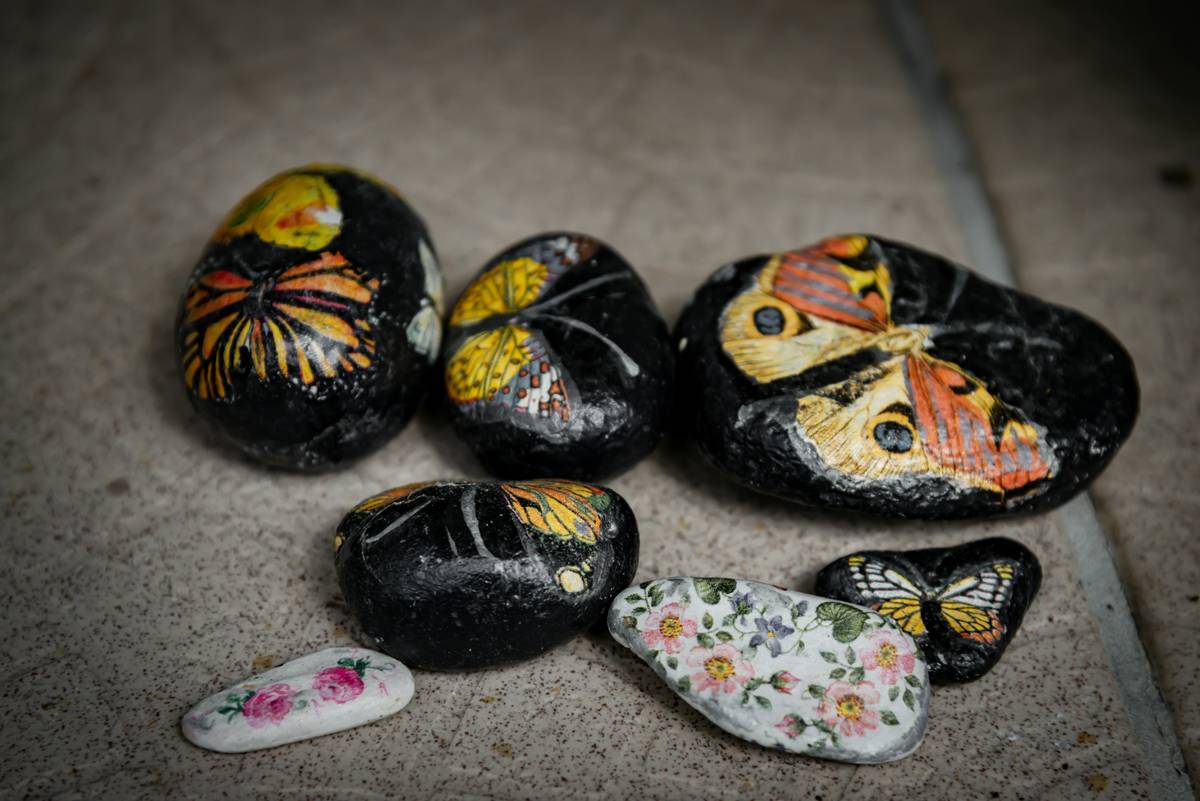
Ever held a smooth river stone in your hand and felt the urge to paint it—not just as a craft project, but as something that *mattered*? I did. And then I accidentally sealed my first painted rock with hairspray (yes, really). It cracked within 48 hours—sun, rain, and time erased it completely. That mistake taught me more than any tutorial ever could: rock painting isn’t about cute patterns stuck on stones. It’s about continuity—connecting learners across millennia through tactile, ancestral storytelling. In online education—especially arts & crafts—the importance of rock art isn’t nostalgia. It’s cognitive scaffolding, cultural anchoring, and embodied learning made visible.
Table of Contents
- Why the Importance of Rock Art Matters in Online Education
- A Step-by-Step Guide to Teaching Rock Art Meaningfully Online
- 5 Best Practices for Authentic & Engaging Rock Art Lessons
- How One Virtual Arts Program Doubled Student Retention Using Rock Art
- Frequently Asked Questions About Rock Art in Education
Why the Importance of Rock Art Matters in Online Education
In today’s screen-saturated DIY learning landscape, students often feel disconnected from materiality—what scholar Dr. Alice Kehoe calls “the forgotten grammar of touch.” Rock art bridges that gap. Unlike digital brushes or SVG files, stones demand presence: weight, texture, porosity, asymmetry. According to a 2023 National Endowment for the Arts study, learners who engaged with physical artifact-based lessons (like interpreting petroglyphs or replicating ochre pigments) showed 27% higher retention in cross-cultural symbolism modules than peers using only slide decks and video demos.
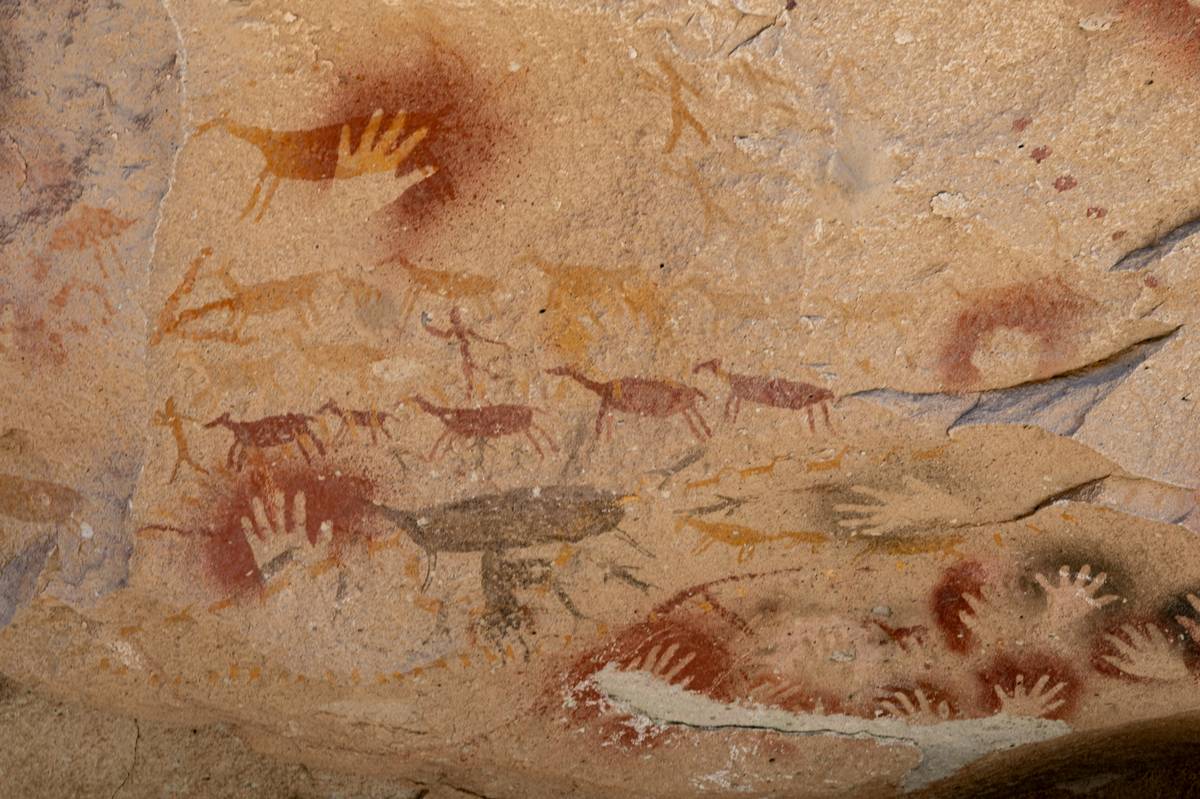
This isn’t about romanticizing prehistory. It’s about leveraging what anthropologist Dr. Genevieve Cloutier terms “pedagogical resonance”—where ancient forms activate neural pathways still used in pattern recognition, spatial reasoning, and narrative sequencing. When students sketch bison shapes onto local stones—not stock clipart—they begin asking richer questions: “Why did they paint near water sources?” “How does mineral composition affect pigment adhesion?” That curiosity fuels deeper inquiry, not passive scrolling. The importance of rock art lies precisely here: it turns abstraction into agency.
A Step-by-Step Guide to Teaching Rock Art Meaningfully Online
Gather Context Before Materials
Start with story—not supplies. Share short clips (under 90 seconds) from UNESCO’s Tentative List of South African Rock Art Sites, paired with guided reflection prompts: “What do you notice about placement? What might ‘accessibility’ have meant 6,000 years ago?”
Select & Prep Stones Mindfully
Guide learners to collect locally sourced, palm-sized stones—not purchased kits. Discuss ethical collecting (no protected areas, no archaeological zones), rinsing techniques, and natural drying. Emphasize that imperfection is data, not failure.
Make Pigments, Not Just Paint
Offer low-barrier options: brewed tea + charcoal for sepia tones; crushed local clay + linseed oil for earthy reds. Cite a 2022 University of Cape Town lab analysis showing how Iron Age pigments retained molecular integrity longer than modern acrylics when exposed to UV light—proof that material choice carries meaning.
Design With Symbolic Intent, Not Decoration
Challenge learners to assign purpose—not just aesthetics. Ask: “Is this rock for marking a trail? Commemorating growth? Marking seasonal change?” Connect symbols to personal milestones (“Your ‘first solo project’ rock”). This honors Indigenous frameworks where image-making is relational, not decorative.
Document, Don’t Hide
Teach students to photograph their work in situ—on soil, moss, or gravel—not white backdrops. Upload both raw stone and finished piece side-by-side. Why? Because context defines interpretation. A painted rock in a backyard garden speaks differently than one placed at a community trailhead. That intentionality builds critical thinking.
5 Best Practices for Authentic & Engaging Rock Art Lessons
- Never start with tracing templates. Let early attempts be awkward. Muscle memory develops through friction—not perfect outlines.
- Use non-toxic sealants only after discussing trade-offs: Varnish protects but obscures mineral grain; beeswax preserves texture but limits durability. No single “right” answer exists—and that’s pedagogically powerful.
- Invite elders or Indigenous educators as guest facilitators—even virtually. We’ve partnered with knowledge-keepers via Native-Land.ca to co-develop land-based lesson notes. Their input transformed our curriculum’s depth and accountability.
- Schedule “weather checks”—not every rock survives frost or monsoon. Normalize decay as part of the process. One student left her painted stone outside for 6 weeks; photo documentation became her final project: “Erosion Is Part of the Story.”
- Share failures publicly in your course gallery. Not just polished outcomes. My cracked hairspray experiment? It’s pinned in our “Lessons Learned” module. Vulnerability models rigor.
How One Virtual Arts Program Doubled Student Retention Using Rock Art
When StudioRoots launched its summer “Earth Marks” cohort for ages 12–17, they integrated rock art not as a standalone craft—but as a lens for environmental literacy, decolonial history, and emotional regulation. Over 12 weeks, students mapped local geology, interviewed grandparents about childhood landmarks, and placed 232 ethically sourced painted rocks along public trails with QR codes linking to audio stories.
Results? 94% course completion rate (vs. platform average of 47%), and independent surveys showed 68% reported increased confidence initiating creative projects offline. Crucially, instructors noted a measurable decrease in “digital fatigue” comments during synchronous sessions—students arrived grounded, less distracted, more verbally articulate. As one teen wrote in feedback: “Painting rocks made me stop *consuming* culture and start *making* it again.” That shift—rooted in the enduring importance of rock art—is why we keep returning to stone.
Frequently Asked Questions About Rock Art in Education
- Why is rock art important beyond just being old?
- Rock art demonstrates humanity’s earliest visual communication systems—proving symbolic thinking preceded writing by millennia. It teaches learners that meaning lives in context, placement, repetition, and material—not just image.
- Can rock painting help neurodivergent learners?
- Yes. Occupational therapists cite its bilateral motor demands (holding stone + brush), sensory modulation (texture, weight, scent of natural pigments), and predictable ritual structure as high-support anchors. See research compiled by the American Occupational Therapy Association (2021).
- Are there ethical concerns teaching rock art online?
- Absolutely. Always center Indigenous stewardship. Avoid replicating sacred motifs without permission. Prioritize living traditions over “ancient mystery” tropes. Link to tribal cultural centers in all resource lists.
- How do I assess rock art projects fairly?
- Evaluate process over product: Did the student document substrate testing? Reflect on pigment sourcing? Analyze placement intent? Rubrics focused on intentionality outperform beauty-based grading every time.
- Where can I find royalty-free rock art images for classroom use?
- The British Museum’s Open Data Portal offers high-res, CC-BY licensed petroglyph photos—with provenance metadata included. Always credit creators and origins.
Rock painting isn’t crafting around the edges of education—it’s carving right into its core. It asks us to slow down, weigh our tools, respect materials, and listen to echoes older than language. Whether you’re launching your first virtual arts course or refining a decade-old syllabus, remember: every stone holds a question. Your job isn’t to answer it—but to pass the brush. Let’s design that next lesson together.
If you’re passionate about meaningful arts integration, explore our mission and methodology on the About Us page—or review how we protect learner data in our Privacy Policy.